Lesintor - 20+Years Industry experience, Professional plastic crusher manufacturers


Water vs Oil Mold Temperature Controller: How to Choose in 2026
2026-11-05
×
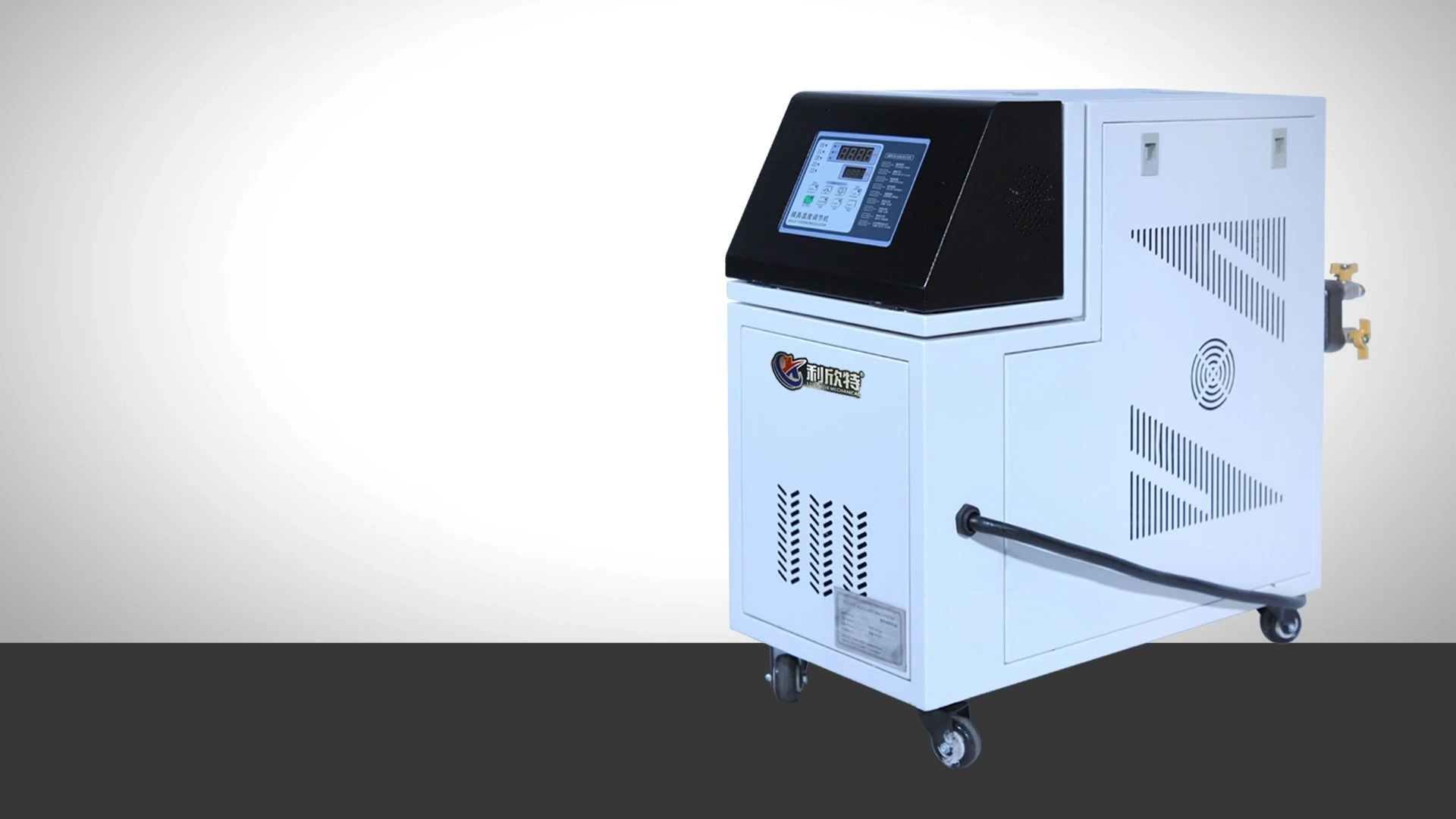
1. The core difference is the heat-transfer fluid
Both machines use the same architecture: a tank, a pump, electric heating elements, a cooling circuit, and a PID (or PLC) controller that typically holds temperature within ±0.5–1°C. The difference is the fluid: water units circulate treated water, while oil units circulate heat-transfer oil. The fluid sets the temperature ceiling, the operating pressure, the maintenance regime, and the running cost.
2. Water vs oil: the head-to-head comparison
Factor | Water-type MTC | Oil-type MTC |
Typical max temperature | ≈95–120°C standard; 160–180°C pressurized high-temp water | ≈200°C standard; 300°C (some 350°C) high-temp models |
Operating pressure | Higher at high temperature (water is pressurized) | Low pressure even at high temperature — oil stays liquid |
Heat transfer / response | Excellent: high specific heat and thermal conductivity, fast heating & cooling | Slower heat exchange; gentler, very uniform heating |
Fluid cost | Very low (treated water) | Higher (thermal oil; periodic replacement) |
Maintenance issues | Scale, limescale and corrosion; water treatment needed | Oil aging/oxidation, carbon buildup on heaters, leak cleanup |
Cleanliness & safety | Clean, no fumes; risk of leaks/steam and freezing | Possible fumes and slip hazards; fire risk if oil exceeds flash point |
Best materials | PP, PE, ABS, PS, PET, PC (general & cosmetic parts) | High-temp engineering plastics: PEEK, PPS, LCP, PA, PC blends; die casting |
Typical applications | General injection molding, packaging, medical, optical, food-contact | Engineering resins, thermosets/rubber, die casting, hot plates, extrusion |
Upfront & running cost | Lower purchase price, lower running cost | Higher purchase price and higher fluid/maintenance cost |
Key takeaway Temperature decides the argument: under ~120°C, water is almost always the better business choice — cheaper, faster and cleaner. Once the process lives above 150°C, oil becomes the only practical option because pressurized water systems get expensive and demanding. |
3. When a water-type MTC is the right choice
- Commodity and mid-range resins: PP, PE, ABS, PS, PET and standard PC parts run comfortably in the water range
- Cosmetic and optical parts: clean fluid, no oil fumes, fast response for glossy surfaces and lenses
- Medical and food-contact molding: water-based systems avoid oil contamination concerns in clean production
- Short cycles and high cooling demand: water's high thermal conductivity removes heat quickly between shots
- Cost-sensitive production: lowest fluid cost, simplest maintenance and lowest purchase price
Two practical cautions: use treated/softened water to control limescale, and in hard-water areas plan periodic descaling. If the plant sees freezing temperatures, add glycol or drain the system during shutdowns.
4. When an oil-type MTC is the right choice
- High-temperature engineering resins: PEEK, PPS, LCP and high-filled PA often need mold temperatures of 150–200°C+
- Die casting and metal molds: oil units sustain the high, even temperatures dies require
- Thermosets, rubber and composites: stable long-duration heating without pressurization
- Large or thick-walled molds: low-pressure high-temperature circulation is safer and gentler on seals
- Hard-water environments: oil eliminates scale and corrosion inside mold cooling channels
The trade-off is discipline: thermal oil oxidizes over time, heaters can carbonize, and overheated oil creates fumes and fire risk. A scheduled oil-analysis/replacement program is part of running an oil unit, not an optional extra.
5. A 6-step selection process
- Define the target mold temperature for every resin you run — the maximum value sets water or oil.
- Check whether any future material (e.g. PEEK, PPS) will push demand above 150°C; size for tomorrow, not just today.
- Calculate heating capacity and pump flow against mold weight, channel layout and required heat-up time.
- Confirm control accuracy (PID ±0.5–1°C is standard) and whether you need PLC communication or data logging.
- Audit plant conditions: water quality, ambient temperature, ventilation for oil units, and available voltage.
- Check safety and compliance: over-temperature protection, low-level alarms, pressure switches, CE marking and warranty.
If your process is… | Recommended MTC type |
≤ 120°C, general resins, fast cycles | Standard water-type |
120–180°C, still water-based process | High-temperature pressurized water-type |
150–200°C, engineering plastics | Standard oil-type |
200–300°C, PEEK/PPS/die casting | High-temperature oil-type |
Two different mold zones at different temperatures | Dual-temperature (dual-circuit) MTC |
Frequently Asked Questions
Q: Which is better, a water or oil mold temperature controller?
A: Neither is universally better — temperature decides. Water units are cheaper, cleaner and faster below about 120°C (160–180°C pressurized), while oil units are required for sustained 150–300°C processing because thermal oil carries high temperature at low pressure without scale or corrosion.
Q: What is the maximum temperature of a water mold temperature controller?
A: Standard water units reach roughly 95–120°C at ambient pressure. High-temperature pressurized water systems can extend this to about 160–180°C, but they require pressure-rated components, seals and piping, which narrows their cost advantage over oil units.
Q: Can I use oil in a water-type mold temperature controller?
A: No. Water and oil units differ in seals, pumps, tanks, safety devices and venting design. Running oil in a water unit risks leaks, seal failure and fire. Use a machine purpose-built for the fluid, or specify a dual-fluid-capable model from the manufacturer.
Q: Do oil mold temperature controllers cost more to run?
A: Yes. Thermal oil is more expensive than treated water, oxidizes and must be tested and replaced periodically, and heaters may need decarbonizing. Oil units also carry a higher purchase price, but they are the only viable option for high-temperature engineering resins and die casting.
Q: How accurate are mold temperature controllers?
A: Quality PID-controlled units typically hold circulating-fluid temperature within ±0.5–1°C. Actual mold surface uniformity also depends on channel layout, pump flow and insulation, so the controller and the mold design must be considered together.
Start from the resin's required mold temperature, not from the machine brochure. Below 120°C water wins on cost and responsiveness; above 150°C oil wins on capability and safety; and if one mold needs two temperatures at once, a dual-temperature unit is the third option worth pricing.
About Lesintor
Suzhou Lesintor Import and Export Co., Ltd. (Lesintor) is a Chinese manufacturer with 20 years of experience in injection-molding auxiliary equipment. Its mold temperature controller range includes water-type, oil-type, and dual-temperature (dual-circuit) units with PID/PLC control, brand-name pumps and heating elements, CE compliance, ISO-certified manufacturing, and a one-year whole-machine warranty. Lesintor also supplies granulators, industrial chillers, dryers, hopper loaders, color mixers, cooling towers, central conveying and dehumidifying systems — a true one-stop auxiliary-equipment source.
| WhatsApp: +1 628 488 4101
ReviewsNumber of comments: {{ page.total }}
I want to comment?{{item.nickname ? (item.nickname.slice(0, 2) + '*****') : item.source === 1 ? 'mall buyer' : '--'}}
{{item.comment_time}} Review in the {{item.country}} Reviews
Merchant {{replyItem.nickname ? (replyItem.nickname.slice(0, 2) + '*****') : replyItem.source === 1 ? 'mall buyer' : '--'}} {{replyItem.parent_nickname ? (replyItem.parent_nickname.slice(0, 2) + '*****') : '--'}}
{{replyItem.is_merchant_reply === 1 ? replyItem.reply_time : replyItem.comment_time}} Review in the {{replyItem.country}} Reviews

No customer reviews
recommended for you
Get in touch with us
Quick Links
products
Leave A Message And We Will Contact You
Let's Have A Chat